
How to Choose Healthcare Components Group Products
Choosing the right Healthcare Components Group products can feel overwhelming, especially when safety, compatibility, and performance are on the line. You’re not alone—many healthcare professionals struggle to compare technical specifications while staying within budget and meeting regulatory requirements.
To choose Healthcare Components Group products, define your device’s intended use, operating conditions, dimensions, materials, and performance requirements. Compare product specifications, connections, tolerances, customization options, and system compatibility.
Verify biocompatibility, sterilization suitability, certifications, traceability, labeling, and quality records. Request current drawings, samples, lead times, warranties, and technical support details.
Calculate total ownership costs, including maintenance and replacement needs. Use a final checklist and obtain stakeholder approval before ordering; the steps ahead can help you make a confident choice.
Key Takeaways
- Define the intended use, operating conditions, dimensions, interfaces, performance requirements, and measurable acceptance criteria before comparing products.
- Verify materials, biocompatibility, sterilization suitability, chemical resistance, tolerances, traceability, and quality-control documentation.
- Compare configurations, connectors, mounting patterns, capacities, customization options, and system compatibility using drawings, samples, or prototypes.
- Confirm applicable FDA, ISO, European, electrical, safety, labeling, certification, and test-report requirements for the intended market.
- Evaluate supplier reputation, technical support, lead times, warranties, maintenance, replacement needs, and total cost of ownership before approval.
Define Your Medical Device Requirements

Before choosing components, define your medical device’s requirements, including its intended use, operating conditions, dimensions, materials, performance standards, and regulatory obligations. Clarify who’ll use the device, where it’ll operate, and what risks it must control.
These details help you establish measurable specifications instead of relying on assumptions.
Prioritize patient safety by identifying potential hazards, failure modes, and essential protective features. Determine required tolerances, load capacities, temperature ranges, chemical resistance, sterilization methods, and expected service life.
Document how each component must function within the complete device, including interfaces, power needs, and maintenance requirements.
Next, identify applicable regulatory standards, quality-system expectations, testing protocols, and market-specific approvals. Confirm whether your device requires biocompatible, traceable, or validated materials.
Define acceptance criteria before contacting suppliers, and record every requirement in a controlled specification. A clear, complete baseline lets your engineering team evaluate suitability consistently, reduce redesigns, and support verification, validation, and regulatory submissions throughout development.
Compare Healthcare Components Group Products

With your requirements documented, compare Healthcare Components Group products against the specifications that matter most for your device. Review each product’s intended application, dimensions, connection options, operating range, and compatibility with your assembly.
Compare Healthcare Components Group products by application, dimensions, connections, operating range, and compatibility with your device assembly.
Create a side-by-side comparison so you can identify which options meet your functional needs without adding unnecessary features or cost.
Evaluate product customization options carefully. Determine whether you can request particular configurations, packaging, labeling, or documentation to support your design and production process.
Ask how the supplier handles design changes, repeat orders, and forecast adjustments, especially if your device may evolve.
Consider supplier reputation alongside product selection. Look for evidence of dependable communication, responsive technical support, consistent order fulfillment, and experience serving medical-device manufacturers.
Customer references, certifications, and documented quality systems can help you assess business reliability without making assumptions.
Finally, request samples, drawings, and current product information before choosing. Confirm availability, lead times, minimum order quantities, and commercial terms so your decision reflects both technical fit and practical purchasing requirements.
Compare Materials, Tolerances, and Quality Controls
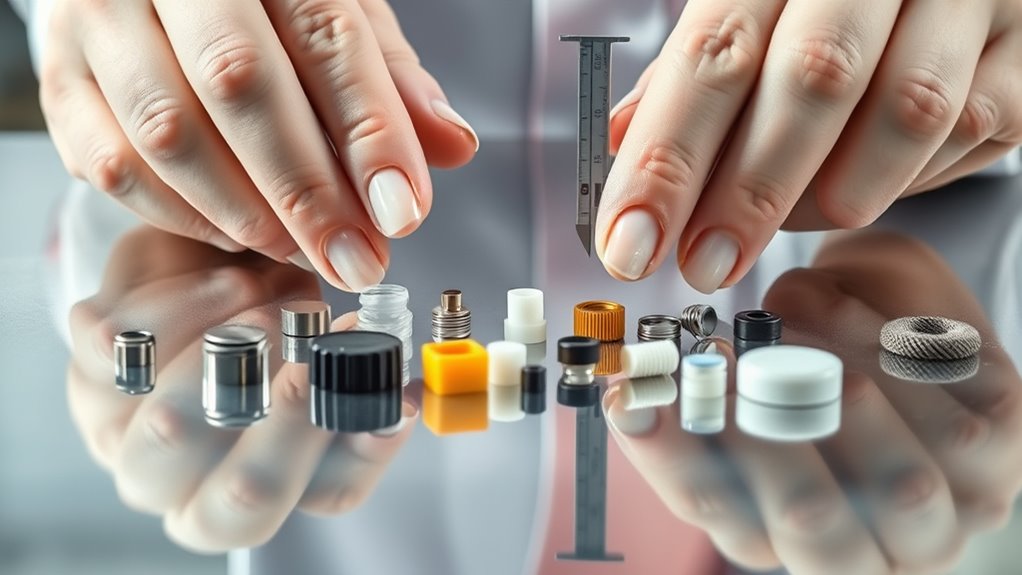
Compare the materials used in each Healthcare Components Group product, including their grade, finish, chemical resistance, and suitability for sterilization or repeated cleaning.
Check material variations carefully. Alloys, polymers, and coatings can affect durability, cleanliness, and service life. Ask for certificates that verify composition and applicable regulatory requirements.
Review tolerance standards for dimensions, surface roughness, and critical features. Tighter tolerances may improve consistency, but they can also increase cost, so match precision to your application’s needs.
Confirm how the manufacturer measures, documents, and controls each characteristic.
| Check | What to verify |
|---|---|
| Material | Grade, finish, and resistance |
| Cleaning | Sterilization and chemical compatibility |
| Dimensions | Tolerance limits and measurement method |
| Quality | Inspection records and certificates |
Look for documented incoming-material inspections, in-process checks, final testing, and traceability.
Evaluate sampling plans, calibration practices, and corrective-action procedures. You’ll gain confidence when quality controls are repeatable, transparent, and supported by recent inspection data rather than broad claims.
Compare suppliers’ records before selecting your product.
Confirm Medical Device System Compatibility
Confirm that each Healthcare Components Group product integrates with your medical device’s interfaces, dimensions, materials, and operating requirements. Check connector types, attachment points, clearances, and mounting patterns before you select a component.
Compare drawings, specifications, and interface data to guarantee the part will fit without forcing, modifying, or compromising surrounding assemblies.
Evaluate device integration across the complete system, not just at one connection. Confirm that tubing, cables, fasteners, seals, and moving parts work together during installation, operation, cleaning, and maintenance.
Review pressure, temperature, flow, electrical, and motion requirements against the component’s stated capabilities. If your device includes software or electronic controls, verify that the component’s signals and communication needs align with the system architecture.
Assess user ergonomics, too. Make sure clinicians can reach controls, attach connections, read indicators, and replace components comfortably while wearing required protective equipment.
Request samples or prototypes when fit remains uncertain. Then test assembly, access, movement, and serviceability in a representative device configuration before placing your order.
Capture your findings for future purchasing decisions.
Verify Regulatory and Safety Compliance
Once you’ve confirmed system compatibility, verify that each Healthcare Components Group product meets the regulatory and safety requirements for its intended use. Identify the applicable regulatory standards for your device, market, and clinical setting before selecting a component.
Check product documentation for references to FDA requirements, ISO standards, European regulations, or other authorities relevant to your region. Confirm that the manufacturer provides current safety certifications, declarations of conformity, test reports, and traceability records.
Review labeling, intended-use statements, installation instructions, and warnings to ensure they match your application. You should also determine whether the product requires sterilization, biocompatibility assessment, electrical safety testing, or controlled handling.
Ask the supplier for clarification when documentation appears incomplete, expired, or inconsistent. Keep copies of certificates and approval records in your purchasing files.
Compare Performance, Durability, and Lifespan
Evaluate each Healthcare Components Group product against the performance requirements of your application, including operating range, response time, flow rate, load capacity, or other relevant specifications.
Establish clear Performance benchmarks before comparing datasheets, test results, and third-party evaluations. Look beyond peak ratings to verify whether each component maintains consistent output under continuous use, temperature changes, pressure variations, cleaning cycles, and expected workload.
Assess material quality, construction, and resistance to wear, corrosion, chemicals, impact, and repeated sterilization. Review available Durability testing data, including cycle counts, failure rates, and conditions that may shorten service life.
A product that performs well initially may cost more if it requires frequent replacement or maintenance.
Estimate total lifespan using warranty terms, replacement intervals, historical reliability, and manufacturer support. You’ll make a stronger choice by comparing results under similar conditions instead of relying on marketing claims.
Document your findings, identify performance trade-offs, and select the product that delivers dependable operation throughout its expected service life.
Evaluate Custom Sizes and Configurations
Match each Healthcare Components Group product’s available dimensions and configuration options to your application’s space, connection, mounting, and capacity requirements. Confirm the component will fit without crowding nearby equipment or forcing modifications that could compromise safety or performance. Measure installation clearances, access points, and service areas before you choose a size.
> Match product dimensions and configuration options to your space, connections, mounting needs, capacity, and required service clearances.
Consider custom sizing when standard dimensions don’t suit your enclosure, assembly, or workflow. Ask whether you need altered lengths, diameters, port locations, thread types, or mounting patterns. Review configuration options such as orientation, connection style, material selection, finishes, and integrated features.
Select only the variations your application requires. Unnecessary complexity can increase cost, lead time, and installation errors.
Check that the chosen configuration supports your operating loads, fluid or air paths, and compatibility requirements. Compare dimensional drawings, tolerances, and interface specifications against your existing components.
If you’re replacing a part, record its critical measurements and connection details first. Then verify the new design will install correctly and function without adapters or unplanned changes.
Review Supplier Support and Documentation
Review Healthcare Components Group’s supplier support and documentation before finalizing a product. You’ll want clear assistance throughout selection, ordering, installation, and use.
Confirm that representatives answer technical questions promptly and understand your application requirements. Reliable supplier support can help resolve specifications, compatibility concerns, and implementation questions before they affect operations.
Next, assess the documentation quality. Look for current product data sheets, dimensional drawings, material details, operating instructions, certifications, and maintenance guidance.
Verify that each document identifies the correct model, revision, and applicable standards. You should also confirm whether Healthcare Components Group provides traceability records, test results, and change notifications when your quality system requires them.
Ask how you’ll access updates and whom you should contact for clarification. Well-organized documentation reduces interpretation errors and helps your team follow consistent procedures.
If information appears incomplete, outdated, or difficult to obtain, request clarification before approving the product. Strong support and thorough records give you confidence in your selection and simplify internal review.
Calculate Total Cost of Ownership
Calculate the total cost of ownership for each Healthcare Components Group product, not just its purchase price. Include shipping, installation, configuration, training, maintenance, replacement parts, and disposal costs. This broader view helps you compare options accurately and avoid unexpected expenses after purchase.
> Evaluate each Healthcare Components Group product’s total ownership cost, including purchase, support, maintenance, replacement, and disposal expenses.
Estimate how often you’ll replace consumable components and whether staff will need specialized support. Review warranty terms, service fees, energy use, software subscriptions, and any required accessories.
If a product requires downtime for maintenance, consider the operational cost of that interruption, too. Use these figures for practical budget planning.
Create a multi-year estimate that reflects expected usage, inflation, and replacement schedules. Then use the results in vendor negotiations.
Ask suppliers about volume discounts, bundled services, extended warranties, reduced shipping charges, or more favorable payment terms. Request clear pricing for recurring and optional costs so you can identify the most economical choice.
Compare total projected expenses across products rather than selecting the lowest initial quote. A disciplined cost assessment protects your budget and supports a sustainable purchasing decision.
Use a Final Healthcare Components Checklist
Before placing your order, use a final Healthcare Components Group checklist to confirm that each product meets your clinical, operational, safety, and budget requirements.
Verify every component’s specifications, compatibility, materials, dimensions, certifications, and intended application. Confirm that quantities, lead times, shipping terms, warranties, and return policies match your project schedule and procurement rules.
Review your Cost analysis to ensure you’ve included purchase prices, installation, maintenance, replacement, training, and disposal expenses. Compare the projected total with your approved budget, then document any assumptions or potential cost changes.
Check supplier reputation by reviewing quality records, customer feedback, regulatory history, responsiveness, and fulfillment performance. Ask for missing documentation before you commit.
Finally, have clinical, engineering, infection-control, finance, and purchasing stakeholders review the checklist. Record approvals, unresolved questions, and contingency plans.
Keep the completed checklist with your quotes and specifications so you can defend your decision, streamline reordering, and verify that the delivered products match your requirements.
Frequently Asked Questions
What Industries Commonly Use Healthcare Components Group Products?
You’ll commonly find Healthcare Components Group products in medical device manufacturing, pharmaceutical production, biotechnology, hospitals, diagnostics, laboratory research, and dental equipment.
Aerospace and defense organizations may also use specialized components when they develop life-support or monitoring systems.
In each industry, you’ll value reliable parts that support performance, regulatory compliance, and patient safety. These products can help you build equipment for monitoring, treatment, testing, fluid management, and other critical healthcare applications where consistency matters.
Can Healthcare Components Group Provide Product Samples Before Purchase?
You can often request product samples before purchase, but availability depends on Healthcare Components Group’s inventory, specifications, and supplier agreements. Contact the company directly to confirm its sample policies, request quantities, lead times, shipping costs, and eligibility requirements.
If you need product customization, provide drawings, materials, dimensions, and performance criteria upfront. Customized samples may require setup fees or longer timelines.
Early sampling can reveal fit, quality, and compliance issues before full production.
What Is the Typical Lead Time for Ordering These Products?
You’ll typically see lead times of a few days to several weeks, depending on the product, order size, customization, and shipping destination. Check current inventory availability first, because in-stock items usually ship faster than made-to-order or backordered products.
For accurate ordering timelines, contact Healthcare Components Group with your specific part numbers and quantities. They can confirm production schedules, estimated dispatch dates, and any expedited options before you place your order.
Does Healthcare Components Group Offer International Shipping and Distribution?
Yes, Healthcare Components Group may support international shipping, but you’ll need to confirm availability for your destination, product category, and order size.
Think of it as opening a door: you should contact the company directly to verify current International shipping options, export requirements, and estimated delivery times.
Ask about its distribution channels, authorized partners, customs documentation, and responsibilities for duties or taxes. A representative can also explain regional restrictions and coordinate logistics.
How Can I Request a Quote From Healthcare Components Group?
You can request a quote from Healthcare Components Group by contacting its sales team through the company’s website, phone, or email. Include the product name, part number, quantity, specifications, delivery location, and desired timeline.
Mention any product customization requirements so representatives can prepare accurate pricing inquiries. Ask about minimum order quantities, shipping costs, lead times, and payment terms.
Providing complete information helps you receive a faster, more precise quotation.
Conclusion
Choosing Healthcare Components Group products isn’t about selecting the cheapest part. It’s about balancing cost with confidence. Compare materials, tolerances, compatibility, compliance, customization, support, and long-term ownership before you decide.
A low-priced component may create expensive risks, while a carefully documented one can protect patients and simplify production. Use your final checklist, verify every requirement, and choose the Healthcare Components Group product that strengthens your device, not merely the one that fits it.