
5 Simple Health Hacks for a Healthy Life
Staying healthy can feel harder than it should, especially when busy days make good habits easy to overlook. You’re not alone—many people want more energy, better sleep, and improved wellness without completely changing their routines. These simple health hacks can help you build a healthier life one manageable step at a time.
Start your day with water to rehydrate and support digestion, circulation, and temperature control. Build balanced meals with produce, protein, and whole-grain or starchy carbohydrates.
Add brief movement breaks by stretching, walking, or doing simple desk exercises throughout the day. Follow a consistent sleep schedule and create a calming bedtime routine.
Finally, stack healthy habits onto routines you already follow, such as stretching after brushing your teeth. Keep going for practical ways to make these habits stick.
Key Takeaways
- Drink water after waking and throughout the day to support hydration, digestion, circulation, and temperature regulation.
- Build balanced meals with half produce, one-quarter protein, and one-quarter whole grains or starchy carbohydrates.
- Take two-to-five-minute movement breaks hourly by stretching, walking, climbing stairs, or doing simple exercises.
- Follow a consistent sleep schedule and create a calming, screen-free bedtime routine in a cool, dark room.
- Make healthy habits easier through habit stacking, visible reminders, meal preparation, and tracking consistent progress.
Start Your Day With Water
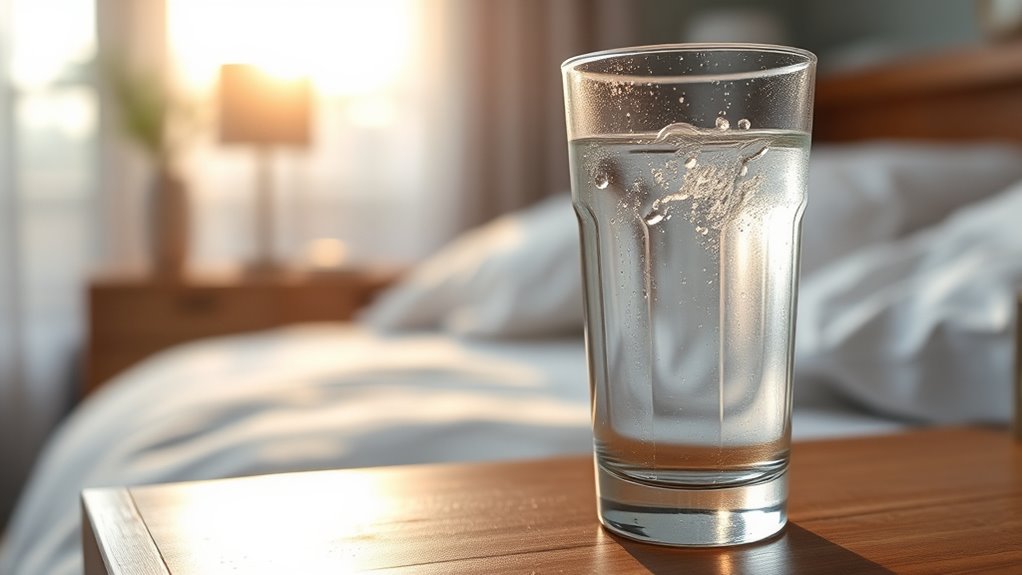
Start your day with a glass of water to rehydrate your body after sleep. Overnight, you lose fluid through breathing and perspiration, so drinking water helps restore balance and support normal body functions. This simple habit can also help you feel more alert and ready to focus.
To make morning hydration easier, keep a reusable bottle beside your bed or place a glass near your coffee maker. Take steady sips instead of forcing down a large amount at once. You can add lemon or mint for flavor, but plain water works perfectly.
The benefits of hydration extend beyond the first hour. Staying adequately hydrated supports digestion, temperature regulation, circulation, and comfortable movement throughout your day.
Pay attention to thirst, dry mouth, and dark urine, which may signal that you need more fluids. Build consistency by drinking water when you wake, then refilling your bottle before leaving home. Small choices like these can make hydration automatic and sustainable.
Build Balanced Meals With Three Components

Build balanced meals around three components: a source of protein, a serving of vegetables or fruit, and a portion of whole-grain or starchy carbohydrates.
This simple formula helps you get steady energy and essential nutrients without complicated rules.
Choose grilled chicken, beans, eggs, or tofu for protein. Add colorful produce, then complete your plate with brown rice, oats, potatoes, or whole-grain bread.
| Component | Easy choices |
|---|---|
| Protein | Chicken, beans, eggs, tofu |
| Produce | Spinach, berries, carrots, apples |
| Carbohydrates | Oats, rice, potatoes, bread |
Use portion control by filling half your plate with produce, one quarter with protein, and one quarter with carbohydrates.
You don’t need perfect measurements. Your hand can guide practical servings.
Meal prepping makes balanced choices easier when your schedule gets busy. Cook a batch of protein, wash produce, and portion grains into containers.
Keep ingredients flexible so you can create satisfying combinations throughout the week.
Notice hunger and fullness, and adjust portions to your needs.
Add Short Movement Breaks Every Day

Short movement breaks can refresh your body and mind during a busy day. You don’t need a gym or a long workout; brief activity can ease stiffness, improve circulation, and restore your focus.
Try these simple options:
- Stretch regularly: Create short Stretching routines for your neck, shoulders, wrists, hips, and calves. Hold each gentle stretch for several breaths without forcing discomfort.
- Move between tasks: Stand, walk around your room, or climb a few stairs after finishing an email or phone call.
- Use your workspace: Add Desk exercises such as seated leg lifts, shoulder rolls, wall push-ups, or controlled squats beside your chair.
- Set helpful reminders: Schedule a two- to five-minute break every hour. Keep water nearby, and use each pause to move instead of scrolling.
Start with one break today, then build consistency. Listen to your body, breathe steadily, and choose movements you enjoy.
These small actions can make an active lifestyle feel practical, comfortable, and achievable.
Create a Simple Sleep Routine
A simple sleep routine can help your body recognize when it’s time to rest. Choose a consistent bedtime and wake-up time, even on weekends.
Dim the lights, silence notifications, and keep your bedroom cool, dark, and quiet. These sleep hygiene practices can improve your comfort and support deeper rest.
Build calming bedtime rituals that signal relaxation:
| Time | Action | Purpose |
|---|---|---|
| 60 minutes before | Dim lights | Encourage melatonin release |
| 30 minutes before | Take a warm shower | Relax tense muscles |
| 15 minutes before | Read a paper book | Settle your mind |
| Bedtime | Turn off screens | Reduce stimulating light |
Avoid caffeine late in the day and skip heavy meals close to bedtime. If worries keep you awake, write them down before you get under the covers.
Reserve your bed for sleep whenever possible, so your brain links it with rest. If you can’t sleep after about 20 minutes, get up and do something quiet until you feel drowsy.
Make Healthy Habits Easier to Repeat
Once your sleep routine feels manageable, make other healthy habits easy to repeat by connecting them to things you already do. This approach, called habit stacking, turns daily triggers into helpful reminders.
Choose small actions that fit naturally into your schedule, and use these motivational strategies to keep going:
Choose simple, motivating actions that fit your routine and make healthy habits easier to repeat.
- After brushing your teeth, stretch for two minutes.
- When you brew coffee, drink a glass of water first.
- After lunch, take a short walk or climb a few stairs.
- Before watching TV, prepare tomorrow’s healthy snack.
Keep each habit simple enough to complete on busy days. Place useful items where you’ll see them, such as walking shoes beside the door or fruit on the counter.
Track your progress with a calendar, but don’t demand perfection. If you miss a day, restart at the next opportunity instead of waiting for Monday.
Reward consistency with something enjoyable, like a favorite podcast during your walk. As these actions become automatic, you’ll build momentum without relying on willpower alone.
Frequently Asked Questions
How Can I Manage Stress Effectively Throughout the Day?
Manage stress by pausing regularly, breathing slowly, and focusing on what you can control. Use mindfulness techniques, such as noticing your breath, relaxing your shoulders, or naming five things you see.
Practice time management by choosing three priorities, breaking tasks into smaller steps, and scheduling short breaks. Move your body, drink water, and limit unnecessary notifications.
When tension rises, talk with someone you trust and remind yourself that progress matters more than perfection.
What Health Screenings Should I Schedule Regularly?
You should schedule health screenings regularly because waiting until you feel sick is not a reliable plan. Ask your clinician which tests fit your age, sex, family history, and risks.
Preventive care may include blood pressure, cholesterol, diabetes, cancer, vision, dental, and immunization checks. Follow recommended intervals, and update them after major health changes.
These appointments support early detection, helping you address problems sooner and protect your long-term health with confidence.
Social connection supports your overall health by reducing stress, strengthening resilience, and encouraging healthy habits. Strong Social bonds can lower feelings of loneliness and help you manage challenges more effectively.
They also give you practical and emotional support when you need it. Regular interaction benefits your Mental well being, improves mood, and may protect against depression.
Make time for friends, family, neighbors, or community groups to nurture meaningful relationships and feel more connected.
Which Supplements, if Any, Are Worth Taking?
Which supplements are worth taking? Think of them as tools, not magic: you’ll benefit most when a deficiency, life stage, or medical condition creates a clear need.
Dietary supplements may include vitamin D, B12, iron, or folic acid, but testing and professional guidance matter. Follow personalized Vitamin advice, avoid megadoses, and choose independently tested products.
A balanced diet usually covers your needs, while unnecessary pills can interact with medications or cause harm.
How Can I Quit Smoking or Reduce Alcohol Consumption?
You can quit smoking by setting a firm date, removing cigarettes, and identifying triggers. Use nicotine alternatives, such as patches, gum, or lozenges, to manage cravings, and ask a healthcare professional about medications and counseling.
To reduce alcohol, track every drink, set weekly limits, avoid trigger situations, and tell supportive people your plan. Choose an alcohol replacement, such as sparkling water or tea. If withdrawal feels severe, seek medical help promptly.
Conclusion
You don’t need to overhaul your life to feel healthier. Start with water, build balanced meals, move in short bursts, and protect a consistent sleep routine.
Then make those choices easier by preparing ahead and keeping healthy options visible. Small steps add up, so don’t bite off more than you can chew.
Choose one habit today, repeat it tomorrow, and let progress—not perfection—guide you toward a healthier, more energetic life every day. These simple health hacks can help you build a healthier life that lasts.