10 Affordable Health Screening Options
Finding affordable health screenings can feel overwhelming, especially when you’re unsure where to start or how much you’ll pay. You’re not alone—many people struggle to access preventive care. The options below can help you find convenient, low-cost screenings and prepare with confidence.
You can find affordable health screenings at community health centers, local health departments, nonprofit clinics, pharmacies, health fairs, and mobile outreach events. Ask about free or sliding-scale fees, payment plans, and required documents.
Consider blood pressure, cholesterol, blood sugar, HIV and STI, cancer, vision, dental, and mental health screenings. Compare costs and confirm follow-up care before testing.
Bring your medication list and insurance information. The options below can help you choose the right place and prepare confidently.
Key Takeaways
- Visit community health centers, local health departments, and nonprofit clinics for free or sliding-scale screenings.
- Check pharmacies for affordable blood pressure, blood sugar, cholesterol, and other walk-in health checks.
- Use public or nonprofit programs for low-cost mammograms, cervical, colorectal, lung, and prostate cancer screenings.
- Seek affordable vision and dental exams through schools, community clinics, retail centers, and dental programs.
- Find low-cost mental health, HIV, STI, and hepatitis testing through nonprofits, clinics, health departments, or at-home kits.
Find Free or Sliding-Scale Screenings
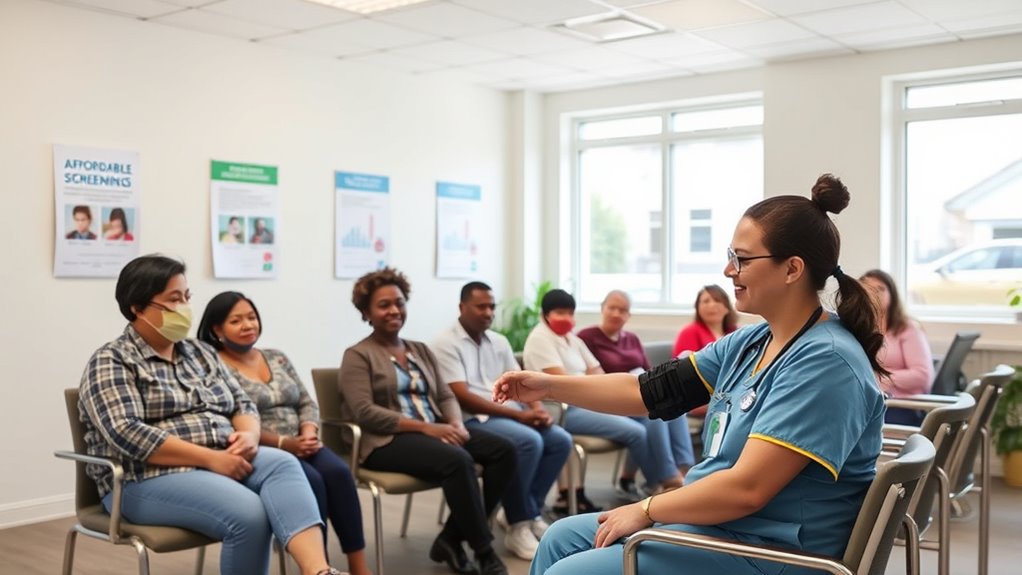
Many community health centers, local health departments, and nonprofit clinics offer free or sliding-scale screenings based on your income. Ask about available appointments, eligibility rules, required documents, and fees before you visit.
Bring proof of income and identification if the organization requests them. Don’t assume you’ll qualify only if you’re uninsured.
Check whether insurance coverage affects the price. Some clinics bill your plan, while others use grants or public funding to reduce costs.
You can also contact your local health department or search for federally qualified health centers through official health resources.
When you call, explain which screening you need. Ask about language services, transportation assistance, or enrollment help.
These organizations may connect you with additional programs that support preventive care. If a clinic has a waiting list, ask whether another nearby provider offers earlier appointments.
Keep a list of contact names, fees, and follow-up instructions. This can help you compare options and plan your care.
Get Low-Cost Blood Pressure Checks

You can get your blood pressure checked at low cost at many local pharmacies. Community clinics may also offer affordable screenings. You can also look for upcoming health fairs in your area.
Visit Local Pharmacies
Local pharmacies often offer quick, low-cost blood pressure checks without an appointment. You can stop by during a shopping trip, ask a trained pharmacist for a reading, and receive results within minutes.
This pharmacy convenience makes routine monitoring easier, especially when you have a busy schedule or lack home equipment.
Before your check, avoid caffeine, smoking, and strenuous activity for about 30 minutes. Sit quietly with both feet flat on the floor, keep your arm supported, and remain silent during the measurement.
Ask for a second reading if the result seems unusual. Record each number and share your log with your healthcare provider.
Pharmacists can also review prescriptions, explain possible blood-pressure effects, and support medication management.
If readings remain high, contact your provider promptly for personalized guidance and next steps.
Check Community Clinics
Community clinics can provide low-cost blood pressure checks when a pharmacy isn’t convenient or accessible. You can often receive a quick reading from trained staff without an appointment, though calling ahead helps you confirm hours, fees, and eligibility.
Ask whether the clinic offers sliding-scale pricing or free screenings for uninsured visitors. Community outreach events may connect you with mobile services, local nurses, and education about keeping your readings healthy.
Some clinics also rely on Volunteer programs, which help them provide basic screenings at reduced costs. Bring a list of medications and recent readings, if available, so staff can spot changes.
Sit quietly for five minutes before your check, keep both feet on the floor, and avoid talking during measurement. If your reading seems high, ask when you should recheck it or contact a clinician.
Use Health Fairs
Health fairs often offer free or low-cost blood pressure checks, especially during wellness events hosted by hospitals, schools, employers, or nonprofits. You can usually walk in, complete a brief registration form, and receive results within minutes.
Ask the screener to explain your reading and recommend follow-up steps if it’s elevated. Wear a short-sleeved shirt so the cuff fits comfortably, and avoid caffeine, exercise, or smoking shortly before testing when possible.
Bring a list of medications and recent readings to support an accurate discussion. Search your local health department, library, workplace, or community center for upcoming events.
Community engagement makes these fairs accessible while creating Volunteer opportunities for residents who want to support neighbors. Remember, one reading isn’t a diagnosis, so schedule professional care for persistent concerns.
Find Affordable Cholesterol Tests

You can compare cholesterol test prices at pharmacies, clinics, and community health centers. You may also find low-cost testing at mobile screening events near you. Checking your options ahead of time can help you save money while keeping track of your heart health.
Compare Cholesterol Test Prices
Comparing cholesterol test prices can help you find an affordable option without sacrificing convenience or reliable results. Start by listing what each price includes, such as the lipid panel, physician review, digital results, or follow-up support.
A lower advertised rate may exclude fees that raise your final bill, so read the details carefully. Check whether your insurance covers part of the cost, and ask about discounts, membership rates, or payment plans before ordering.
You’ll also want to compare turnaround times and collection requirements, since added time or supplies can affect value. Don’t choose solely by price: Test accuracy matters for informed Cholesterol management.
Review the provider’s credentials, laboratory standards, and customer feedback. Then select the option that balances transparent pricing, dependable results, and features you’ll actually use.
Explore Low-Cost Testing Locations
Once you’ve compared prices, look for low-cost cholesterol testing locations that offer transparent fees and convenient access. Community health centers, public health departments, and retail clinics may provide affordable screenings, especially if you qualify for sliding-scale discounts.
Ask whether the listed price includes consultation, lab processing, and follow-up communication.
Check insurance coverage before paying out of pocket. Your plan might cover preventive cholesterol testing, while an in-network provider can reduce your share.
If you don’t have insurance, ask about cash rates, financial assistance, or free screening events sponsored by local organizations.
Confirm appointment scheduling requirements before visiting. Some sites accept walk-ins, but others require online or phone reservations.
Bring your insurance card, identification, medication list, and questions about preparation. After testing, request a written result and discuss next steps with a clinician.
Check Blood Sugar for Diabetes Risk
Checking your blood sugar can reveal early signs of diabetes or prediabetes, even when you feel healthy. A simple blood glucose test measures the sugar circulating in your bloodstream.
Your clinician may recommend a fasting test, an A1C test, or another screening method based on your age, weight, family history, and symptoms.
Many pharmacies, community clinics, and health fairs offer affordable testing. Ask about sliding-scale fees, insurance coverage, or free screening events.
Before testing, follow instructions about fasting, medications, and timing. Don’t change prescribed medicines without medical advice.
If your result falls outside the healthy range, don’t panic. One reading doesn’t confirm a diagnosis. Your healthcare professional may repeat the test or order additional checks.
Ask when you should test again and which lifestyle changes could help. Regular activity, balanced meals, adequate sleep, and maintaining a healthy weight can lower your diabetes risk.
Seek prompt care if you notice excessive thirst, frequent urination, blurry vision, or unexplained weight loss.
Get Low-Cost HIV and STI Tests
HIV and STI tests can detect infections early, even when you have no symptoms. You can find affordable testing through local health departments, community clinics, nonprofit organizations, and some pharmacies.
Many locations offer free or sliding-scale services based on your income. At-home kits may provide another convenient option. Ask about costs, privacy, and which infections each test covers before you schedule an appointment.
Testing supports HIV awareness and STI prevention by helping you understand your status and protect your health. Depending on your situation, a provider might recommend tests for HIV, chlamydia, gonorrhea, syphilis, or hepatitis.
Share your sexual history honestly so you receive appropriate guidance. Your information should remain confidential. If you get a positive result, seek medical care promptly.
Many infections are treatable, and treatment can reduce complications and transmission. Use condoms or other barriers, discuss testing with partners, and follow recommended retesting schedules.
Regular screening gives you practical information and helps you make informed decisions about sexual health.
Find Affordable Cancer Screenings
Finding affordable cancer screenings can help detect problems early, when treatment may be simpler and more effective. Start by asking your doctor which tests match your age, family history, and personal risk.
Affordable cancer screenings can support early detection; ask your doctor which tests fit your age, family history, and personal risk.
Common options include mammograms, cervical cancer tests, colorectal screenings, lung scans, and prostate evaluations. Don’t assume every test benefits everyone; your provider can explain potential benefits, risks, and recommended timing.
Check whether your insurance covers preventive care without a copay, and ask about deductibles before scheduling.
If you’re uninsured, contact community health centers, county health departments, hospital financial-assistance programs, or nonprofit cancer organizations. Many offer sliding-scale prices, mobile screening events, or free appointments for eligible residents.
If cancer runs in your family, ask about genetic counseling and tests for genetic markers. A counselor can help you understand results and decide whether earlier or more frequent screening makes sense.
Keep records of completed tests, results, and follow-up dates so you don’t miss important early detection opportunities.
Get Low-Cost Vision and Eye Exams
Regular vision and eye exams can catch changes early and help you update your prescription or protect your eye health. You can find affordable care through community clinics, retail optical centers, school-based programs, and local health departments.
Ask about sliding-scale fees, uninsured discounts, or payment plans before scheduling.
| Option | Potential savings | What to ask |
|---|---|---|
| Community clinic | Sliding-scale fees | Do you accept uninsured patients? |
| Retail optical center | Promotional pricing | Is an exam included with glasses? |
| School or college clinic | Reduced student rates | Can community members book appointments? |
| Health department | Public-program rates | Are eligibility rules required? |
Compare prices, confirm whether dilation or imaging costs extra, and check your insurance benefits. Bring your current glasses, medication list, and questions about symptoms.
Regular visits support Eye health awareness, while an accurate prescription improves Vision correction. Don’t delay care if you notice sudden vision loss, flashes, new floaters, pain, or severe redness. Contact an eye professional promptly.
You’ll protect your sight and avoid unexpected expenses by researching options first.
Find Affordable Dental Screenings
Dental screenings can catch cavities, gum disease, and other problems before they become painful or costly. You can protect your Oral health by comparing affordable options in your community. Start with these resources:
- Dental schools: Student clinics often provide exams, X-rays, cleanings, and basic treatment at reduced prices under licensed supervision.
- Community health centers: Federally funded clinics may offer sliding-scale fees based on your income. Ask whether they provide dental screenings or referrals.
- Discount programs: Dental savings plans, nonprofit events, and local health fairs can lower examination costs. Confirm participating providers and fees before scheduling.
Call several offices to request prices for an exam and necessary X-rays. Ask about payment plans, insurance discounts, and free or low-cost appointments.
Your employer, public health department, or insurer may also identify nearby services. Don’t skip routine visits because you feel fine; early care supports strong Dental hygiene and can prevent expensive procedures.
Bring your medication list, insurance information, and questions about recommended follow-up care.
Try Low-Cost Mental Health Screenings
Mental health screenings can help identify concerns such as anxiety, depression, or substance use before they interfere more with daily life. You can start with a free or low-cost screening through a community health center, nonprofit organization, university counseling program, or local support agency.
Many providers offer confidential questionnaires online or during brief appointments, helping you understand whether further evaluation could benefit you. A screening doesn’t diagnose a condition, but it can guide your next step and strengthen mental health awareness.
Ask whether the organization uses licensed professionals, protects your information, and offers referrals for affordable care. You might find sliding-scale counseling, support groups, or telehealth options that improve therapy accessibility.
If you’re uninsured, contact a community clinic or call a local crisis or information line to learn about available resources. Seek immediate help if you may harm yourself or someone else.
Keep your screening results, discuss concerns with a qualified professional, and choose support that fits your needs and budget.
Compare Pharmacy-Based Health Screenings
Pharmacy-based health screenings can offer convenient, low-cost checks for blood pressure, blood glucose, cholesterol, and other common concerns. You’ll often walk in without an appointment, making these services useful when you’re comparing affordable options. However, costs, equipment, and available tests vary by location.
Before choosing a pharmacy, consider:
- Price: Ask whether the screening is free, covered by insurance, or subject to a small fee.
- Services: Compare available tests, result delivery, and whether trained pharmacy staff can explain your numbers.
- Follow-up: Check whether the pharmacy recommends medical care for concerning results or connects you with a clinician.
Ask about screening procedures, including preparation, privacy, and how frequently you should test. A pharmacy screening can identify possible risks, but it doesn’t replace a full examination or diagnosis.
Bring your medications and relevant health information so staff can provide useful guidance. If results seem abnormal, contact your healthcare professional promptly and confirm them through appropriate clinical testing.
Comparing several pharmacies helps you find reliable care within your budget.
Frequently Asked Questions
How Often Should I Schedule Routine Health Screenings?
You should schedule routine health screenings according to your age, sex, medical history, risk factors, and your clinician’s advice. Preventive care often includes an annual wellness visit, blood pressure checks at least yearly, and vaccinations as recommended.
Screening frequency varies: cholesterol tests may occur every four to six years, while diabetes, cancer, and bone-density screenings follow specific guidelines. Ask your healthcare professional to create a personalized schedule and update it after major health changes.
Will My Insurance Cover Affordable Health Screening Services?
Your insurance may cover affordable health screening services, but the answer often hides in the details. Insurance policies typically cover preventive screenings recommended for your age, sex, and risk factors, especially when you use in-network providers.
However, coverage limitations may apply to frequency, deductibles, copayments, or follow-up tests. Before scheduling, call your insurer, confirm benefits, ask about prior authorization, and verify the provider’s network status to avoid unexpected costs.
What Should I Bring to a Health Screening Appointment?
Bring your photo ID, insurance card, referral or appointment confirmation, and a list of medications, supplements, allergies, and medical conditions. You should also bring recent test results and your healthcare provider’s contact information.
Follow any preparation instructions, such as fasting or avoiding certain medicines. Write down questions about lifestyle changes and preventive measures.
Arrive early, wear comfortable clothing, and bring payment if your clinic requires an upfront fee or copayment.
How Can I Prepare for a Health Screening?
You can prepare by laying a strong foundation for your health, one brick at a time. Schedule your appointment, confirm fasting or medication instructions, and gather your medical history, current medicines, allergies, and questions.
Wear comfortable clothing and arrive early with identification and insurance information. Review your family history and note recent symptoms.
Discuss Lifestyle modifications and Preventive measures openly with your clinician, so you’ll leave with clear, practical next steps.
When Should I Discuss Screening Results With My Doctor?
Discuss screening results with your doctor as soon as they’re available, especially if you notice abnormal findings, symptoms, or unexpected changes. Don’t wait for your next routine visit; contact the office and ask about timing considerations for follow-up.
Prepare follow up questions about what the results mean, whether you need repeat testing, and which treatments or lifestyle steps might help. Seek urgent care for severe symptoms or rapidly worsening health concerns.
Conclusion
You don’t need a treasure chest to keep tabs on your health. Free clinics, sliding-scale programs, pharmacies, and community events can open affordable doors to blood pressure, cholesterol, diabetes, HIV, vision, dental, and mental health screenings.
Start with one small step, then follow the trail toward routine care. Early answers can gently steer you away from stormier waters. Compare costs, ask about assistance, and choose screenings that fit your needs and budget.
With these 10 affordable health screening options, you can take a practical step toward protecting your health without overspending.