How to Prepare for a Preventive Health Examination
Preparing for a preventive health examination can feel overwhelming, especially when you’re unsure what to bring, what to ask, or how to follow pre-visit instructions. You’re not alone—many people struggle to organize everything before their appointment.
Prepare for a preventive health examination by gathering your ID, insurance information, medical records, vaccination history, and a current list of medications, supplements, allergies, conditions, and surgeries.
Record recent symptoms, family health history, lifestyle changes, and questions. Check whether you need to fast or follow other instructions, and arrange transportation or language support if necessary.
During the visit, confirm recommended screenings, result timelines, and follow-up steps. The sections below explain how to organize everything efficiently.
Key Takeaways
- Compile updated medication, supplement, allergy, medical-condition, surgical, vaccination, and family-history information.
- Record recent symptoms, health changes, concerns, specialist visits, screenings, and relevant test results.
- Prepare specific questions about symptoms, preventive screenings, medications, lifestyle, risks, and recommended follow-up.
- Confirm fasting or other preparation instructions, gather identification and insurance details, and organize medical records.
- Arrange transportation or language support if needed, and confirm how results and follow-up instructions will be communicated.
Start With a Preventive Exam Checklist
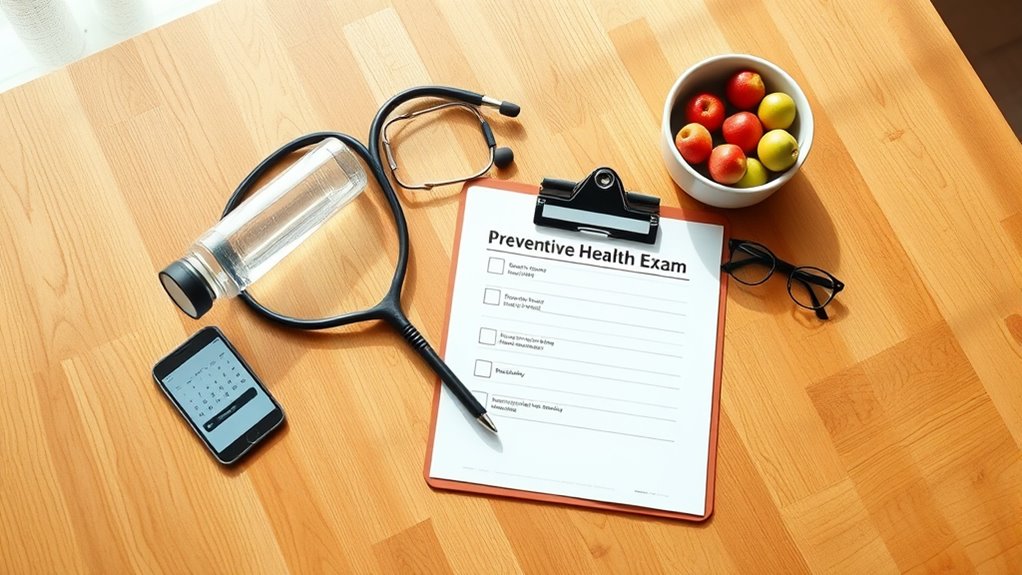
Before your appointment, create a preventive exam checklist to organize your health information and questions. Write down your current medications, supplements, allergies, medical conditions, surgeries, and relevant family history.
Include recent symptoms, changes in your health, and concerns you don’t want to forget. Note your vaccination records, screening history, and any specialists you see, if available.
Add questions about recommended screenings, risk factors, and goals for staying healthy. Consider your daily habits, including nutrition, physical activity, sleep, alcohol use, tobacco use, and stress.
Identify possible lifestyle adjustments you’d like to discuss, such as improving your diet or building a manageable exercise routine. Include mental health considerations, such as persistent worry, low mood, burnout, or sleep difficulties.
Bring your insurance information, identification, and a written list or phone note. Preparing these details helps you communicate clearly, prioritize concerns, and make the most of your appointment without relying on memory alone.
Review your checklist the day before, then update it afterward with agreed next steps.
Learn What Happens at Your Exam

During a preventive exam, you’ll typically review your health history, medications, lifestyle habits, and current concerns with your clinician. You’ll also receive measurements such as your blood pressure, pulse, height, weight, and body mass index.
Depending on your age, sex, risks, and symptoms, your clinician may perform a physical examination and recommend screenings, vaccinations, or laboratory tests.
Expect questions about nutrition, physical activity, sleep, alcohol, tobacco, sexual health, and safety. Discuss lifestyle modifications that could lower your risk or improve your well-being.
Your clinician may also address mental health aspects, including stress, anxiety, depression, mood changes, and social support. Answer honestly; these conversations help tailor recommendations to you.
You’ll have an opportunity to ask questions and clarify follow-up steps. Before leaving, confirm which tests you need, when you’ll receive results, and whether you should schedule another appointment.
Your clinician may also explain warning signs that require prompt medical attention.
Gather Your Medical History

Gather your medical history before your exam. Write down any past conditions, diagnoses, surgeries, and hospital stays. Also, make a list of your current medications, including dosages and supplements, so your provider can review them.
Record Past Conditions
Record your past conditions, surgeries, hospital stays, allergies, and ongoing treatments in one up-to-date list. Include approximate dates, diagnoses, procedures, and recovery details. This medical history helps your clinician recognize patterns, assess risks, and choose appropriate screening tests.
Note past conditions from childhood through adulthood, even if they no longer affect you. Mention chronic illnesses, previous injuries, mental health diagnoses, pregnancy-related complications, and reactions to medicines, foods, or environmental triggers.
If you’re unsure about a date or diagnosis, label it as uncertain rather than guessing. Ask family members or review patient portals, discharge papers, and specialist records to fill gaps.
Bring the list to your appointment, and update it whenever your health changes. Your clear summary can prevent overlooked details and help your clinician understand your complete health background.
List Current Medications
List every prescription medicine, over-the-counter product, vitamin, supplement, and herbal remedy you currently use. Include products you take occasionally, such as pain relievers, sleep aids, antacids, and allergy medicine. Record each product’s name, strength, dose, frequency, and purpose. Note when you started taking it and whether you’ve recently stopped or changed the dose.
Bring the list to your preventive health examination, or store it in a phone app you can access easily. If possible, bring original containers or clear photos of their labels.
Tell your clinician about allergies, missed doses, and any medication side effects, including dizziness, nausea, rash, or unusual bleeding. This information helps your clinician identify drug interactions, prevent duplicate treatments, and decide whether you need medication adjustments or monitoring. Update your list after every change.
List Your Medications and Supplements
Before your preventive health examination, gather the names, doses, and schedules of every prescription, over-the-counter medication, vitamin, and supplement you take. Include occasional products, such as pain relievers, antacids, sleep aids, herbal remedies, and protein powders.
Don’t rely on memory. Check each bottle, pharmacy label, or patient portal, and record the prescribing clinician or reason for use when known.
Create an updated list on paper or in a secure phone app. Note allergies, past medication reactions, and any recent changes, including stopped products or changed doses.
Bring the containers, photographs of labels, or a printed copy to your appointment so your clinician can verify ingredients and strengths.
Ask whether you should continue each product before testing or the visit. Discuss possible interactions, duplicate ingredients, and whether diet adjustments affect medication effectiveness.
Also mention supplement timing, especially if you take products with meals or separate them from prescriptions. Don’t stop prescribed medicine unless your clinician instructs you.
Track any symptoms you’ve noticed, even if they seem minor or unrelated to your reason for the exam. Note when each symptom began, how often it occurs, and whether it’s getting better, worse, or staying the same.
Record what you were doing when it appeared and anything that seemed to trigger, relieve, or worsen it.
Include details such as pain location, intensity, duration, sleep changes, appetite shifts, digestive issues, dizziness, mood changes, or unusual fatigue.
Use a phone note, calendar, or paper log for consistent symptom tracking. Bring your symptom documentation to the appointment, and organize it by date so your clinician can identify patterns quickly.
Don’t wait until exam day to rely on memory. If a symptom feels urgent, severe, or rapidly worsening, contact a healthcare professional promptly rather than waiting for your preventive visit.
During the exam, describe your concerns honestly and ask which symptoms require monitoring, testing, or follow-up.
Review Your Family Health History
Review your family health history to identify inherited conditions that could affect your preventive care. Talk with relatives about major diagnoses, the ages when they were diagnosed, and any patterns of illness. Write down what you learn and share it with your healthcare provider.
Identify Inherited Conditions
Knowing your family health history can help your clinician identify inherited conditions and tailor your preventive care. Look for patterns involving heart disease, diabetes, certain cancers, high cholesterol, or other conditions appearing across relatives or at unusually young ages.
These patterns may signal inherited risks and guide earlier screening, lifestyle counseling, or referrals.
| Family pattern | Possible next step |
|---|---|
| Breast, ovarian, or colon cancer | Discuss genetic counseling |
| Heart disease before age 50 | Review cholesterol screening |
| Several relatives with diabetes | Consider earlier testing |
Share relevant concerns during your examination, especially if a condition affects multiple relatives or seems unusually severe. Your clinician may recommend genetic testing, but testing isn’t necessary for everyone.
Ask what results could mean for your care and relatives before deciding. Focus on recognizing patterns, not diagnosing yourself.
Document Family Medical History
Create a simple record of your family’s major health conditions, including who had them, the age at diagnosis, and how closely related they are to you. Note patterns involving heart disease, cancer, diabetes, high blood pressure, and inherited disorders.
Ask relatives for details, and check obituaries, medical records, or family documents when information is uncertain. Record your findings in a secure digital file or notebook, then update it when relatives receive new diagnoses.
Bring this record to your preventive health examination so your clinician can evaluate your Family risk and recommend appropriate screenings. Mention any early-onset disease, multiple affected relatives, or unusual conditions.
Your history may also guide referrals for Genetic testing or counseling. If family information remains incomplete, tell your clinician; they can still help assess your risks.
Check Which Screenings You May Need
Check with your health care provider which screenings you need based on your age, sex, family history, lifestyle, and medical conditions. Your clinician can match preventive tests to your risks and update them as circumstances change.
Review this guide before your appointment:
| Screening | Common timing | Why it matters |
|---|---|---|
| Blood pressure | Each visit or annually | Detects hypertension |
| Cholesterol | Periodically | Estimates heart risk |
| Diabetes | Based on risk | Identifies high blood sugar |
| Cancer tests | Age- and risk-based | Finds disease early |
Your provider may recommend additional checks, such as bone-density testing, sexually transmitted infection tests, lung cancer screening, or colorectal screening.
Recommendations can vary by pregnancy status, medications, ancestry, and previous results. Bring an accurate medication list and immunization record so your clinician can assess vaccination options alongside screenings.
Follow preparation instructions for fasting, sample collection, or imaging. Ask about lifestyle adjustments that support healthy results, including activity, nutrition, sleep, tobacco avoidance, and alcohol limits.
Schedule approved tests promptly and track due dates for future preventive care.
Prepare Questions for Your Provider
Before your appointment, write down questions about your health concerns, recommended screenings, medications, lifestyle, and follow-up care. Bring this list so you can address each topic without relying on memory.
Note symptoms, changes, or patterns you’ve noticed, and describe when they started, how often they occur, and what affects them. These details can help your provider give more useful answers.
Use clear Question formulation: turn broad worries into specific questions, such as, “What could explain this symptom?” or “Which screenings fit my age and health history?”
Ask why your provider recommends a test, what results might mean, and which options suit your goals. If you take medications or supplements, ask about their purpose, benefits, risks, and possible interactions.
Strong Doctor patient communication works both ways, so mention anything you don’t understand and request plain-language explanations.
Ask when you should expect results, whom to contact with concerns, and what follow-up your care may require. Take notes or bring someone you trust.
Ask What to Do Before Your Appointment
Before your appointment, ask whether you need to fast, and follow any instructions carefully. Gather relevant medical records, such as test results, medication lists, and vaccination history. Also, confirm how to send or bring these documents so your provider has the information they need.
Confirm Fasting Requirements
Ask your healthcare provider whether you need to fast before the examination, since some blood tests require you to avoid food or certain drinks for several hours. Confirm the exact fasting duration and ask when you should begin.
Your provider may explain whether you can drink plain water, take prescribed medicines, or brush your teeth during this period. Don’t assume every test requires fasting; follow the instructions you receive.
Ask about food restrictions if fasting isn’t necessary. You may need to avoid specific foods, alcohol, caffeine, or supplements before certain tests.
Clarify whether you should eat a normal meal beforehand or choose something light. If you have diabetes, feel faint when you skip meals, or take medicine with food, tell your provider before fasting.
Follow personalized guidance rather than changing medications yourself.
Gather Medical Records
Gather recent medical records, including test results, imaging reports, vaccination records, and a current list of medications and supplements. Bring information from specialists, urgent-care visits, hospital stays, and previous preventive screenings.
Note allergies, past surgeries, chronic conditions, and any family health history your clinician may need. If you use digital health records, download or print important documents, and confirm that your portal information is current.
Ask each provider’s office how to send records securely if you can’t access them yourself. Review everything for missing dates, incorrect medication doses, or outdated diagnoses.
Good medical record organization helps your clinician spot trends, avoid duplicate testing, and make safer recommendations. Place documents in one folder, or create a clearly labeled digital file, so you can find them quickly during your appointment.
Confirm Your Follow-Up Plan
Confirm how and when you’ll receive your results, and clarify which findings require follow-up. Ask whether you’ll hear by phone, through a patient portal, or during a scheduled visit. Check how long routine results usually take and whom you should contact if they don’t arrive.
Before leaving, create a clear follow-up schedule with your clinician. Find out whether you need repeat testing, specialist care, lifestyle counseling, or medication changes.
Confirm the recommended timing for each step, and ask what symptoms should prompt earlier attention. Don’t assume a normal result means you need no further care; review every recommendation.
Use your calendar or health app to set appointment reminders. Save the office’s phone number and portal instructions, and verify that your contact information is current.
If you’ll need transportation, time off, or language support, arrange it early.
Finally, ask for written instructions. You’ll be better prepared to track results, complete follow-up visits, and address concerns promptly.
Frequently Asked Questions
How Much Does a Preventive Health Examination Typically Cost?
You’ll typically pay $100–$300 for a preventive health examination without insurance, although cost considerations depend on your location, provider, tests, and facility. With insurance, you may owe nothing when you use an in-network clinician and the visit qualifies as preventive care.
Pricing variability increases if you need laboratory work, imaging, vaccinations, or follow-up services. Check your insurance benefits and request an itemized estimate before scheduling, so you’ll avoid unexpected charges.
Can I Request a Telehealth Appointment for My Preventive Examination?
Yes, you can request a telehealth appointment for your preventive examination. Ask your provider whether a virtual consultation suits your needs, since some screenings, lab tests, and physical measurements still require an in-person visit.
During appointment scheduling, mention your preventive-care goals, medications, and concerns. Your clinic can explain what happens online and arrange any follow-up testing or examination you need afterward.
Will My Insurance Cover Preventive Health Examination Services?
Your insurance coverage may include preventive services, but benefits vary by plan, provider, and network. Check your policy or insurer’s website for covered exams, recommended screenings, age requirements, copayments, and deductibles.
You can also call the number on your insurance card before scheduling care. Ask whether your clinician and facility participate in-network.
Confirm that you’re receiving preventive care, not diagnostic services, because symptoms or follow-up testing may create additional charges for you.
How Often Should Children Have Preventive Health Examinations?
You should schedule preventive health examinations regularly: newborns typically need visits at 3–5 days and 1, 2, 4, 6, 9, and 12 months, then at 15, 18, 24, and 30 months, annually from age 3 through adolescence, following your clinician’s advice.
For example, your four-year-old’s visit can assess child growth, development, vision, hearing, and the vaccination schedule. Don’t wait for illness; routine visits help you identify concerns early and keep immunizations current.
Can I Choose a Different Healthcare Provider for My Examination?
Yes, you can usually choose a different healthcare provider for your examination. Provider flexibility lets you select someone who fits your preferences, insurance coverage, location, and communication needs.
Before switching, check whether your health plan requires referrals or restricts in-network providers. During appointment scheduling, ask about availability, preparation instructions, medical-record transfers, and examination costs.
If you’re arranging care for your child, confirm that the provider treats pediatric patients and offers appropriate preventive services.
Conclusion
Preparing for a preventive health examination doesn’t have to feel overwhelming. Use your checklist, gather your medical history, record medications and symptoms, and review recommended screenings.
Write down your questions, follow any pre-appointment instructions, and confirm how you’ll receive results. These simple steps help you make the most of your visit and give your provider a clearer picture of your health.
With thoughtful preparation for a preventive health examination, you’ll feel ready to take charge of your well-being. One appointment can make a meaningful difference.